Answers
Will Driverless Cars Hit Canadian Roads?
Driverless technology is already being tested on Canadian roads. Here’s what’s happening now, what’s coming next and what it will take to bring fully autonomous vehicles to Canada.

Sep 15, 2026
5 min. read
Courtesy of Helivideo (adobestock.com).
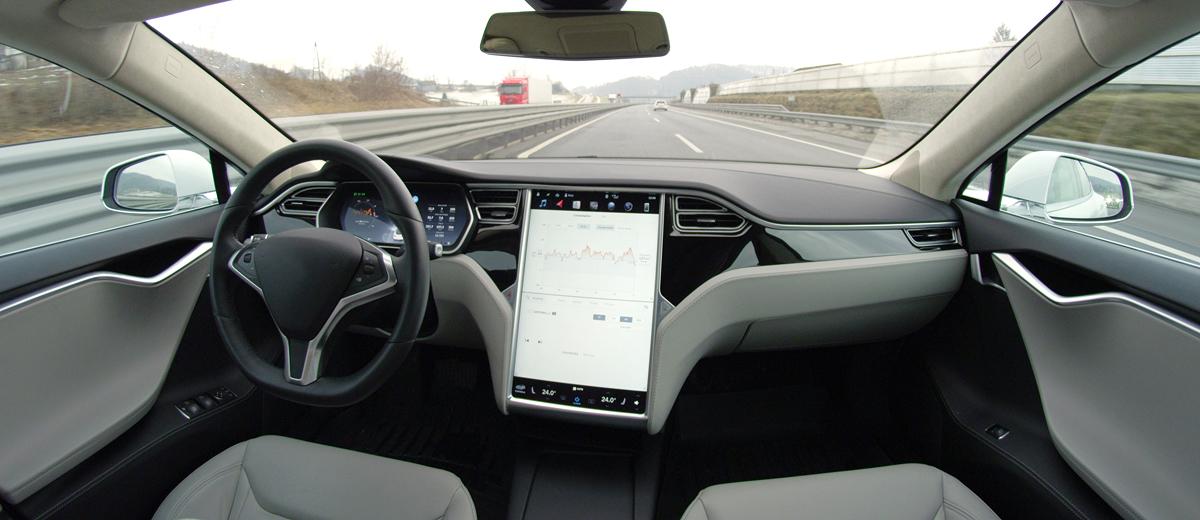
When are driverless cars coming to Canadian streets? It’s a question some drivers sick of rush-hour commutes have been asking for decades, but this technology isn’t science fiction anymore.
In some cases, as with logistics provider Gatik’s driverless delivery trucks, the technology is already on our streets, albeit in limited numbers. In other cases, such as Waymo’s driverless robotaxis, the technology exists but isn’t yet in Canada.
All that could change, however, if Ontario's Automated Vehicle Pilot Program can successfully pave the way for the safe use and regulated rollout of driverless cars.
A Pathway for Driverless Cars
Ontario's Automated Vehicle (AV) Pilot Program was launched in 2016 to allow the testing of driverless vehicles on Ontario’s roads and includes all highly automated and driverless vehicles that operate on public roads in Ontario; those vehicles must be registered, approved and display signage that the vehicle is a driverless AV being tested as part of the pilot. Driverless AV operators must be able to provide proof that their vehicles are safe and effective and must promptly report any collisions.
“The province has worked closely with industry partners to safely test automated light-duty vehicles, including passenger vehicles, delivery vans and small shuttles,” a spokesperson for Ontario’s Ministry of Transportation said.
So far, no collisions, injuries or fatalities have been reported by vehicles operating in automated mode as part of the pilot, the spokesperson added. But the Ministry didn’t disclose how many kilometres vehicles in the pilot have driven, nor which companies were testing the use of driverless cars.
In 2025, Ontario launched a separate Automated Commercial Motor Vehicle Pilot Program for certain trucks over 4,500 kilograms. It’s under that program that Gatik intends to roll out a fleet of 50 driverless trucks delivering goods to more than 300 Loblaws stores in the Greater Toronto Area.
These pilot programs provide valuable data to policymakers who must figure out how to safely regulate this rapidly evolving technology. What (if any) safety standards driverless vehicles should have to meet is still up for debate.
So, What Is a Self-Driving Car?
It is, admittedly, a bit confusing. They go by many names: self-driving cars, driverless cars, automated or autonomous cars, robotaxis. But whatever you call them, it’s important to remember these vehicles exist on a spectrum.
Automated vehicles (AVs) are typically categorized into one of six levels, a scale developed by the Society of Automotive Engineers (SAE):
- Level 0: No Driving Automation.
- Level 1: Driver Assistance. (e.g., adaptive cruise control, lane-departure warning.)
- Level 2: Partial Driving Automation. This is the maximum level of automation in cars drivers can currently purchase. (e.g., Tesla Supervised Full Self-Driving, Cadillac Super Cruise, etc.)
- Level 3: Conditional Driving Automation. This means a vehicle can drive itself and monitor the road independently, but only under specific conditions and the driver must be ready to take control of the vehicle at all times. No cars for sale in Canada have Level 3 automation. Mercedes-Benz offered it in other countries, but is now phasing out the feature.
- Level 4: High Driving Automation. These cars can be “driverless,” operating without a human behind the wheel, within limited areas or certain conditions. (e.g., robotaxis from Waymo, Zoox and others.)
- Level 5: Full Driving Automation. Capable of driving anytime, anywhere, in any conditions. This technology doesn’t exist yet.
 Courtesy of Friends Stock (adobestock.com).
All Level 4 vehicles operating on public roads in Ontario must be part of the province’s pilot program. Level 3 vehicles are exempt from the pilot program, but no automaker currently sells them. The rules for Level 5 have yet to be determined but will be developed as the technology eventually comes onto the market.
Could Waymo Robotaxis Come to Canada?
In April, it was widely reported that Waymo wants to participate in Ontario’s Automated Vehicle Pilot Program.
“There are definitely conversations happening on Waymo coming. When that will be is hard to say as it would not only require provincial approval under the pilot program, but also municipal support,” said Teresa Di Felice, CAA Club Group’s assistant vice president for government and community relations.
Waymo operates in 11 American cities, but a Canadian winter would be a major challenge for any robotaxi. Snow and ice reduce grip and visibility and obscure road markings. Those are solvable engineering problems, but they’re problems that need solutions before driverless cars can reliably ease the burden of a rush-hour commute.
Want to take a closer look under the hood? Click here to learn more about how automated driving works, what the different levels of automation mean and what the future could hold in the latest issue of CAA Magazine.
Share this article:
Filter by