Safety
Bike Safety: the ABCs of Safe Cycling
Use our checklist and get your bike road-worthy for spring.

Mar 22, 2024
3 min. read
Get ready get your wheels moving with our helpful cycling preparation tips.
**A: Air and tires **
Check tires for cracks, punctures or leaks and repair any damage.
**B: Brakes and bells **
Test brakes and replace worn-down brake pads and frayed cables. And make sure your bike has a working bell or horn.
C: Chain
Clean, tighten and oil your chain to avoid stiffness or slack.
**D: Drop test **
Lift your bike frame 10 centimetres from the ground and let it drop on its tires to ensure nothing is loose or rattling.
**E: E-bike battery **
Fully charge— and check—your battery before heading out.
**F: Frame **
Clean it and check for any dents or cracks.
**G: Gears **
Test the gears, listen for any grinding sounds and replace any frayed cables.
**H: Helmet **
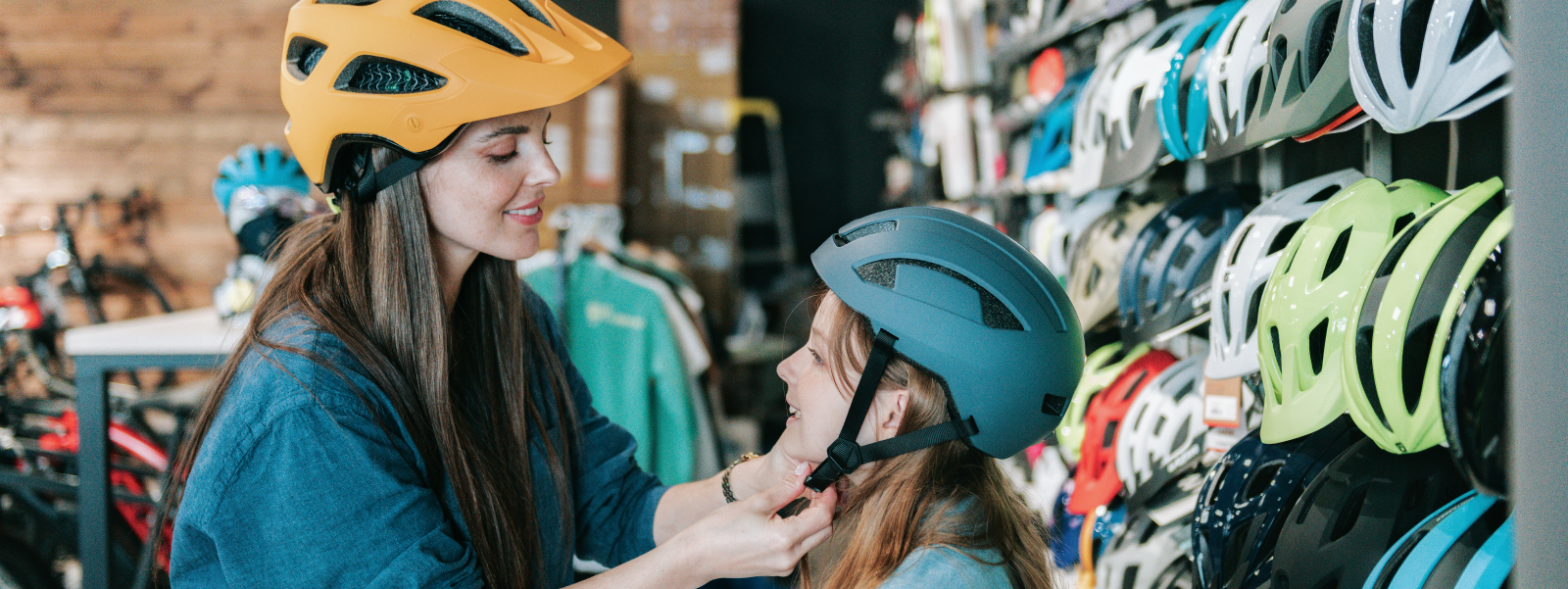
Use the 2V1 rule. The helmet should rest on the forehead two fingers’ width above the eyebrows. Straps should sit flat, form a V under each ear and fit snugly with room to slide one finger between your chin and chin strap.
**I: Illumination **
Some provinces require bikes to have a white light mounted on the front, white reflective tape on the front forks and red reflective tape on the rear forks. Riding at night? Make sure to have a red light or reflector on the back. Both front and rear lights should be turned on 30 minutes before sunset and 30 minutes after sunrise, or in low-visibility conditions.